Free Crochet SHAWL Pattern for Quick and Lovely Projects
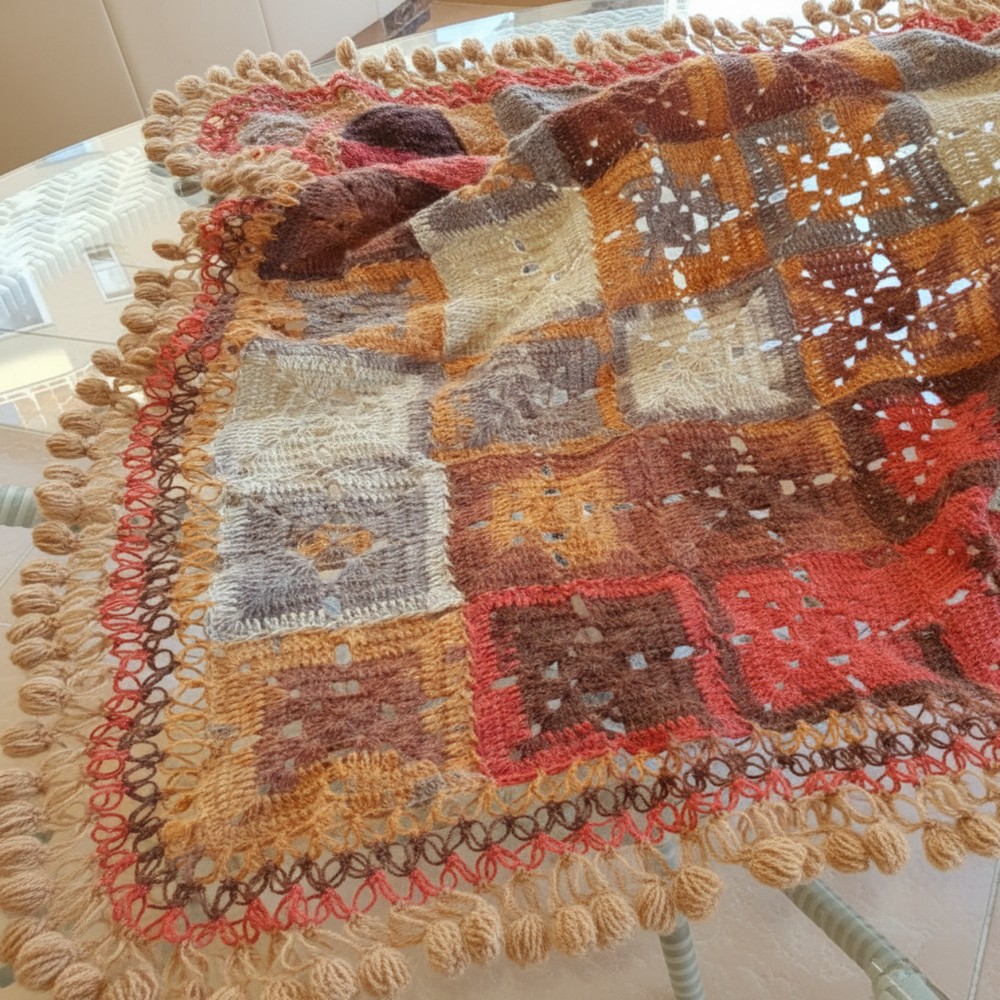
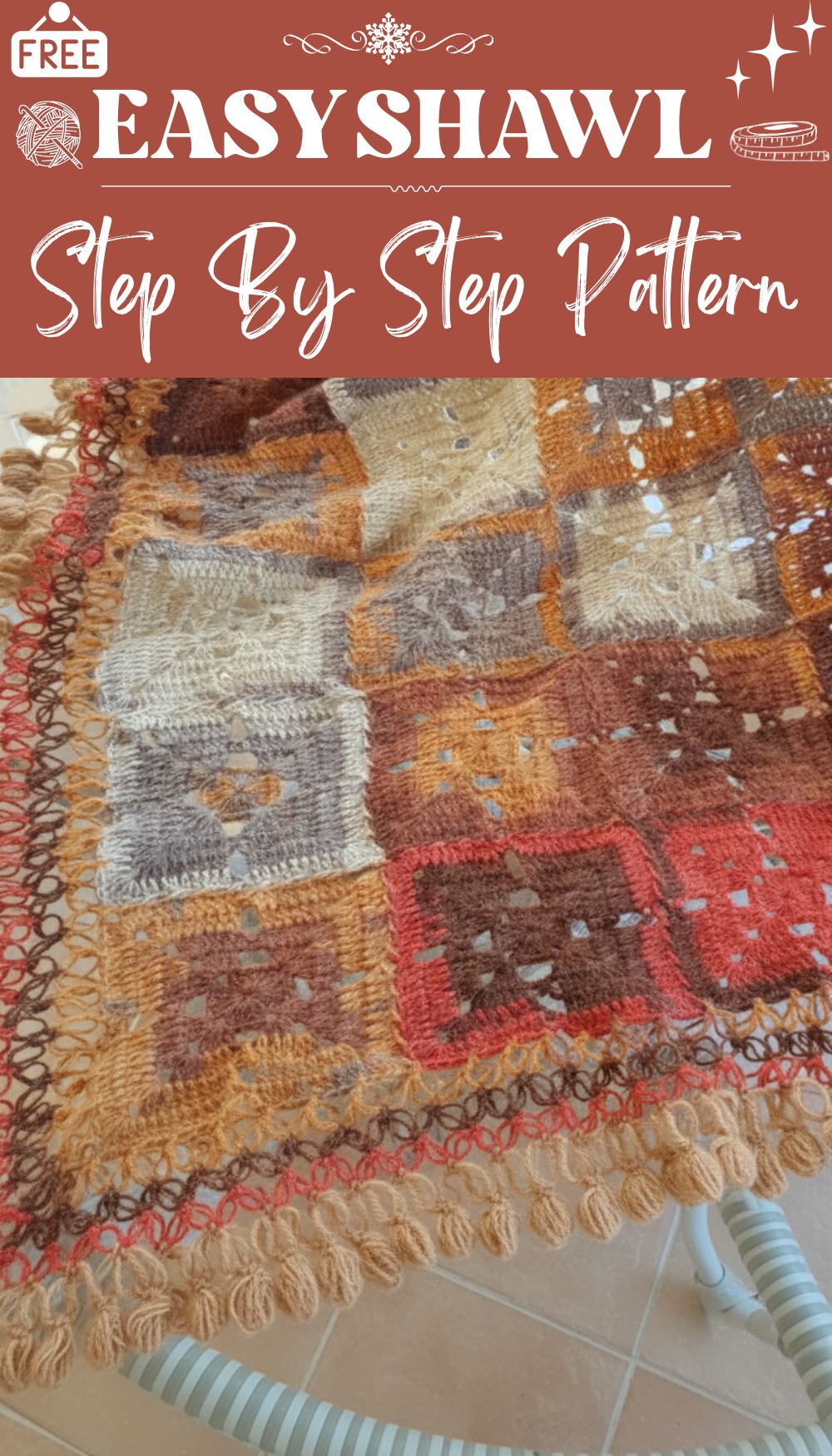
Cover your shoulders in softness and style with this Free Crochet SHAWL Pattern that guides you to cozy comfort for any season or occasion.
A soft piece draped across your shoulders can make any day feel special while offering warmth and gentle beauty. With a crochet SHAWL pattern, you can make a lovely wrap to wear out for a stroll, use at home when relaxing, or give as a thoughtful gift to someone dear. The colors and shapes blend together, turning simple yarn into something beautiful and useful.
Beautiful Free Crochet Shawl Pattern for Everyone
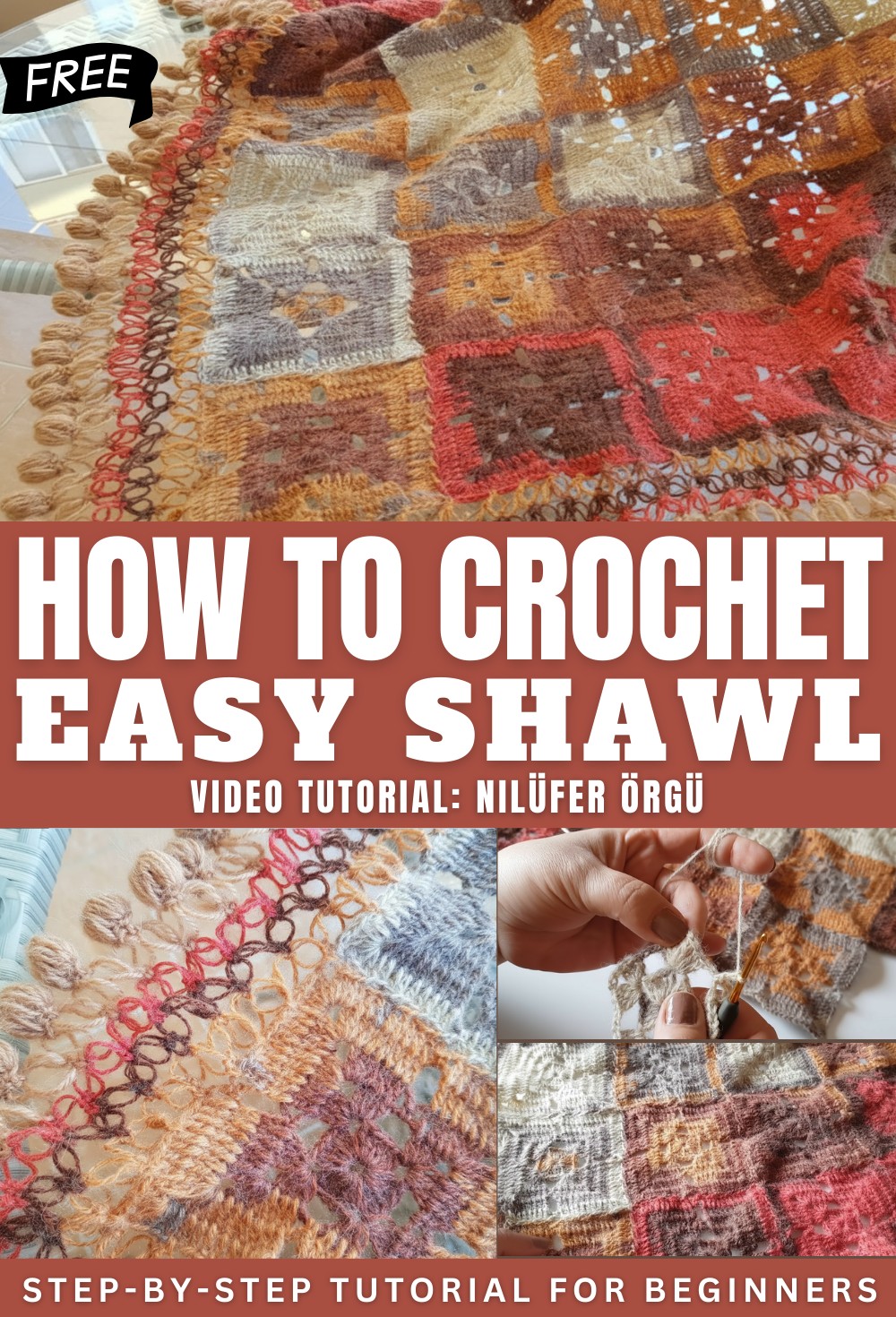
Some shawls feel light and lacy for a little touch of style, while others are thick to keep you warm in cool weather. It is easy to choose the look you like best and match it to what you need. Using this pattern means you get a special item you made yourself, easy to wear in many ways. It is more than just clothing—it is comfort, care, and beauty for every day.
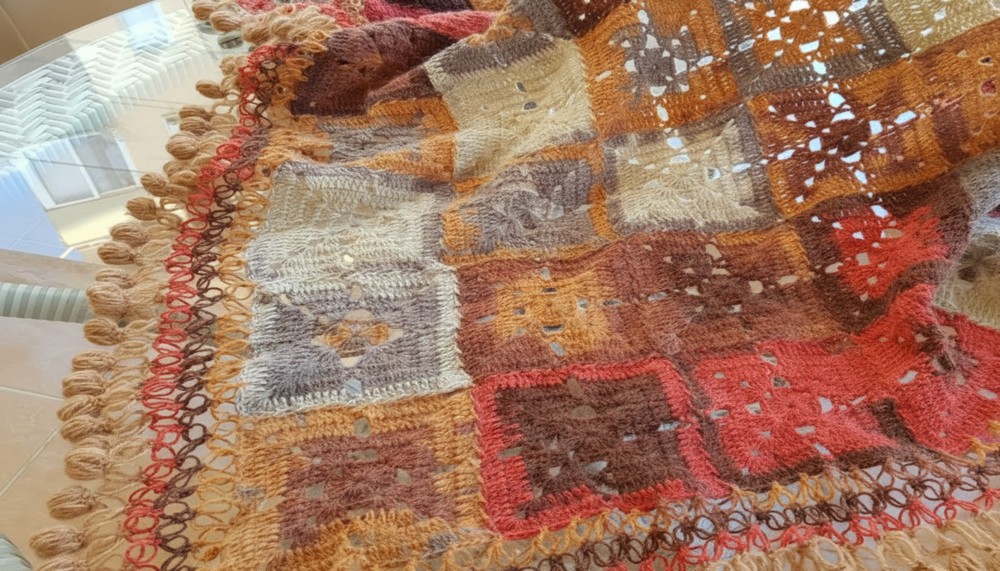
Free Crochet Shawl Pattern
Materials List
- Yarn: Angora or similar lightweight mohair-blend yarn. Substitute with soft lightweight acrylic or wool for preference.
- Hook: 13 mm (Size P/Q or 5 in some metric systems–adjust to suit yarn and desired drape)
- Tapestry needle (for weaving in ends and joining motifs if preferred)
- Scissors
Optional: Stitch markers (to mark corners as you work), blocking pins.
Key Abbreviations
| Abbreviation | Meaning |
|---|---|
| ch | chain |
| sl st | slip stitch |
| sc | single crochet |
| dc | double crochet |
| tr | treble crochet |
| sp | space |
| st(s) | stitch(es) |
| rep | repeat |
| JAYGO | join as you go (motif joining method) |
Special Notes
- Motif is worked in the round.
- Ch 3 at start of round counts as first dc.
- You may start each motif with a magic ring instead of a chain loop.
- Motifs are joined on the final round using the Join-As-You-Go (JAYGO) method.
- Increase the number of motifs for a larger shawl.
- Gauge is not critical; looser tension results in airier fabric.
Pattern
Single Motif
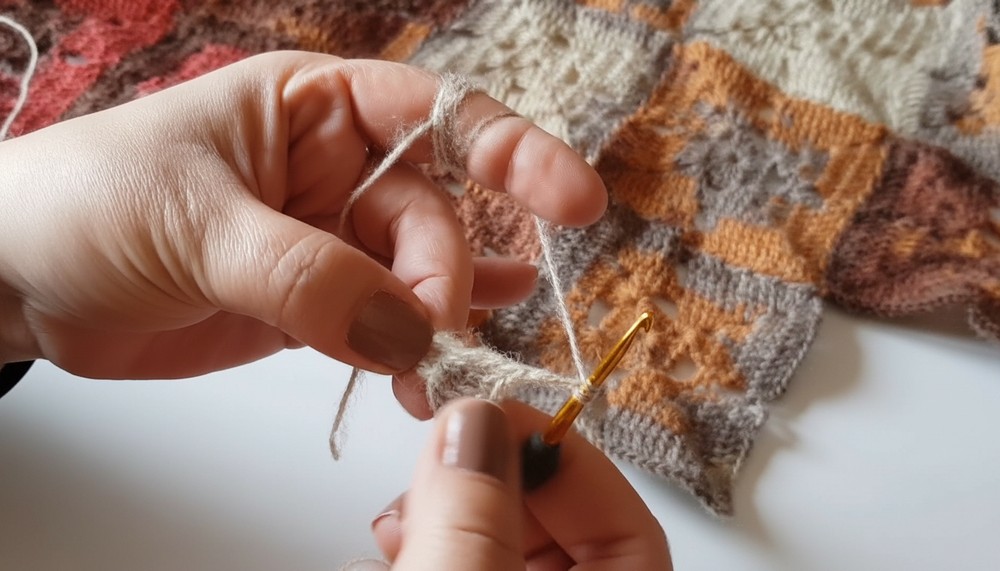
Round 1 (Center)
- Ch 6, join with a sl st to form a loop (or use a magic ring).
- Ch 3 (counts as dc), 4 dc in loop, ch 3, 5 dc in loop, ch 3; rep from * to * 2 more times.
(You should have 4 groups of 5 dc separated by ch-3 corners) - Join with a sl st to top of starting ch-3.
Round 2
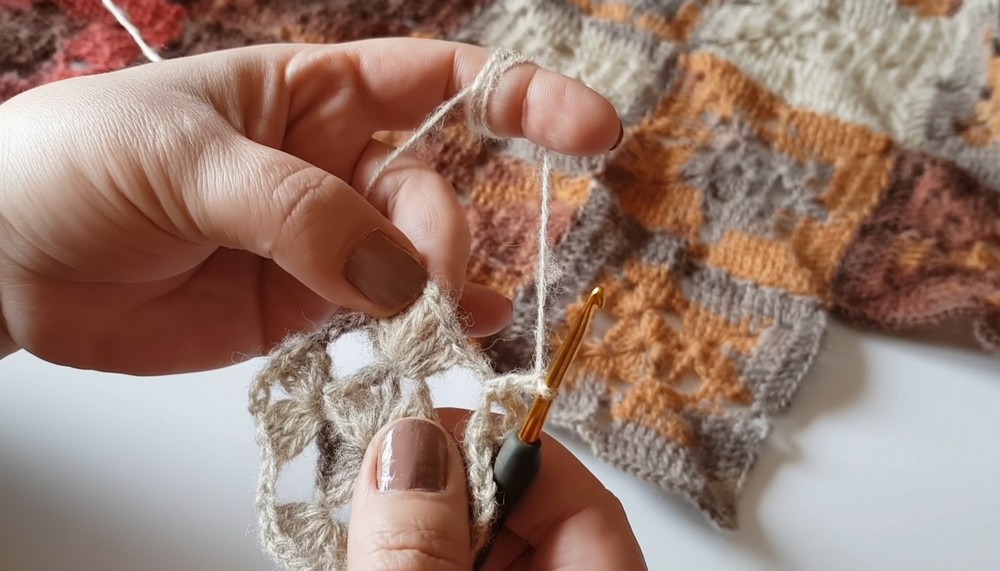
- Ch 6 (counts as dc + ch-3 corner), turn.
- In same corner: (3 dc, ch 3, 3 dc) in space, ch 3, in next ch-3 sp: (3 dc, ch 3, 3 dc).
- Continue around, making (3 dc, ch 3, 3 dc) in each corner, ch 3 between corners.
- For final corner, after last (3 dc), ch 3, join with sl st to 3rd ch of start ch-6.
Round 3
- Ch 6, sc in next ch-3 sp, ch 2.
- (3 dc, ch 3, 3 dc) in next ch-3 corner, ch 2, sc in next ch-3 sp, ch 2.
- Rep step 2 at each corner; after final corner, finish with sc in next ch-3 sp, ch 2, join with sl st to 3rd ch of start ch-6.
Round 4
- Ch 6,
- (3 dc, ch 3, 3 dc) in each ch-3 corner, dc in next 6 dc (along each motif side), ch 2, sc in ch-2 spaces between the main clusters for lacy effect.
- Continue around, join as before.
Round 5 (Final motif/joining round)
- Ch 6.
- (3 dc, ch 3, 3 dc) in each corner.
- On each side: dc in each st across (should be increasing by 3 dcs on each row per motif). If joining to another motif, at the 3rd ch of the corner ch-3 sp, connect to the adjacent motif with a sl st instead of ch 3, then continue.
- Continue around, joining in the corners and sides wherever motifs meet. For open sides, work as normal motif.
Join-As-You-Go (JAYGO) Method
- On the final round, work first corner as usual. For the next corner, when reaching the ch-3 sp, insert hook into the corner sp of the motif you want to join, sl st to join, continue with 3 dc in your motif.
- Along the sides, after every 3 dc, sl st to matching space on the adjacent motif.
- Continue motif round, joining corners and sides in this manner.
- Where three or more motifs meet (multi-join), join in the central chain space of all touching motifs.
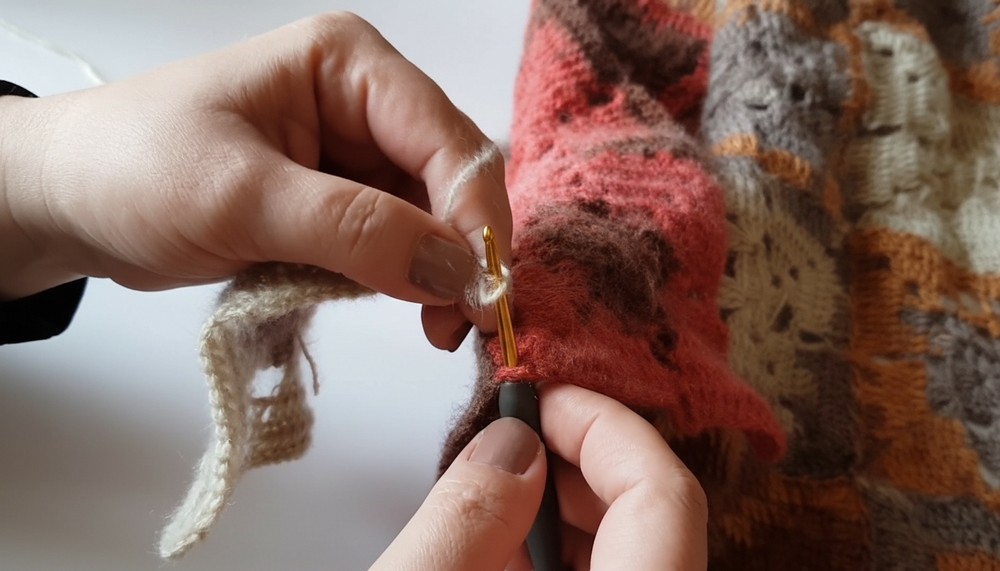
Half Motif (for shawl edges)
Work partial rounds to fill triangle spaces along shawl top:
- Start as for main motif, but only work over two or three sides (half or corner square), increasing at the corners as you would for a full motif.
- Join as with full motifs, aligning to fill gaps.
Shawl Construction
- For a triangle shawl:
- Row 1: Start with 1 motif.
- Row 2: Join 2 motifs to previous motif, side by side.
- Row 3: Join 3 motifs, and so forth, increasing by 1 motif each row.
- Continue until 7 or desired number of motifs in final row for your desired size.
- Fill in triangle gaps at the top with half motifs.
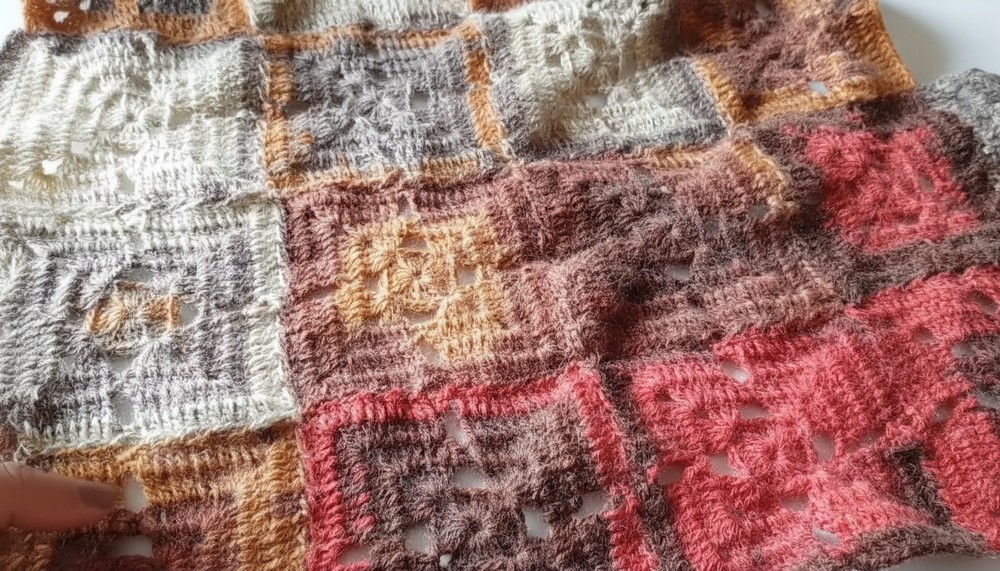
Finishing
- Weave in all ends securely with a tapestry needle.
- Optional: Add a border of sc or hdc along the shawl edges for stability or border interest, or work a spider web edging as desired.
- Block shawl gently to open up lace and ensure points.
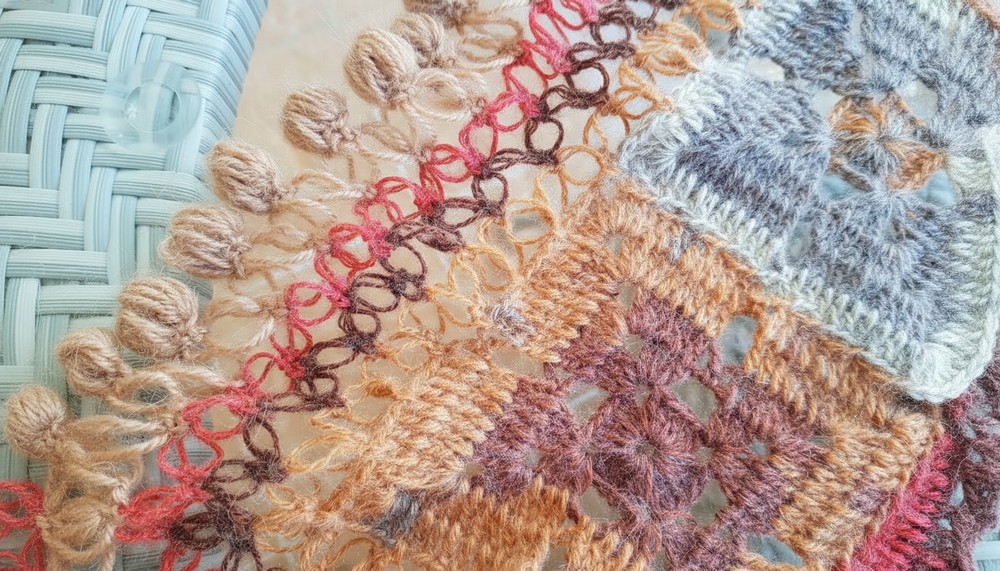
Pattern Corrections & Tips
Corrections
- When joining motifs, be sure to connect matching stitches, not just spaces, for a flat, neat join.
- Tension is important: do not work motifs too tightly, or joins may pucker.
Tips
- Use stitch markers to mark motif corners to keep your placement accurate.
- Take care to count your dcs and chs on each round for even motifs.
- For best drape with angora yarn, use a hook at least 1mm larger than the label recommends.
Conclusion
This modular spider motif shawl grows quickly, produces a dramatic lace effect, and is ideal for angora or soft lightweight yarns. Motifs are easy to adapt in size, and arrangement can be customized for shawls, blankets, or other projects. The join-as-you-go method means less sewing and a seamless finish.