How To Crochet Simple Flower Coaster for Spring

In this post, learn how to crochet a beautiful flower coaster using cotton yarn that does not require any magic ring to start, perfect for beginners. Tips on using two yarn strands for thickness and switching colors are covered. The tutorial emphasizes attention to detail, using stitch markers, and hiding loose ends, resulting in a versatile and elegant coaster using any color. Follow through with us for the complete tutorial!

Crochet Simple Coaster Tutorial
The YouTube video offers a step-by-step tutorial on how to crochet a flower-shaped coaster. The instructor demonstrates the process in an accessible manner, making this project suitable for beginners and advanced crocheters alike. The coaster design is customizable in terms of yarn type, color, and hook size, and can serve as an elegant accessory in your home or as a DIY gift.

Materials Needed
- Yarn: The video uses cotton yarn (60% cotton, 40% acrylic), but the instructor emphasizes that you can use any type of yarn. Doubling the yarn can add thickness to the final product if desired.
- Crochet Hook: A 3.5mm crochet hook is recommended, but this can be adjusted depending on your yarn choice.
- Other Tools:
- Scissors
- Yarn needle for weaving in ends
- Stitch marker for tracking progress in rows
Project Setup
- Preparing the Yarn: The instructor uses two strands of yarn simultaneously to make it thicker. Doubling the yarn is optional and helps avoid buying thicker yarn for the project.
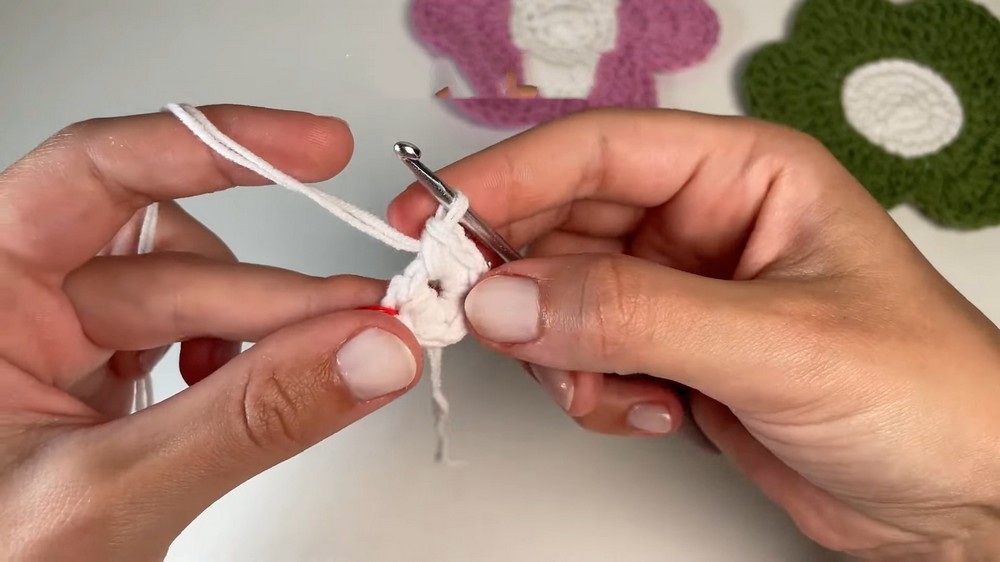
- Slip Knot: The tutorial begins with creating a slip knot as the starting stitch, followed by chaining four stitches to form a small base circle.
Creating the Base Circle
- Forming the Circle: After chaining four, the instructor joins the ends with a slip stitch to create a circle.
- Initial Row Setup: A chain is created as a foundation for stitching into the circle. This marks the beginning of crocheting the petals out of the center point of the circle.
Crocheting Rows
Row 1: Single Crochet Foundation
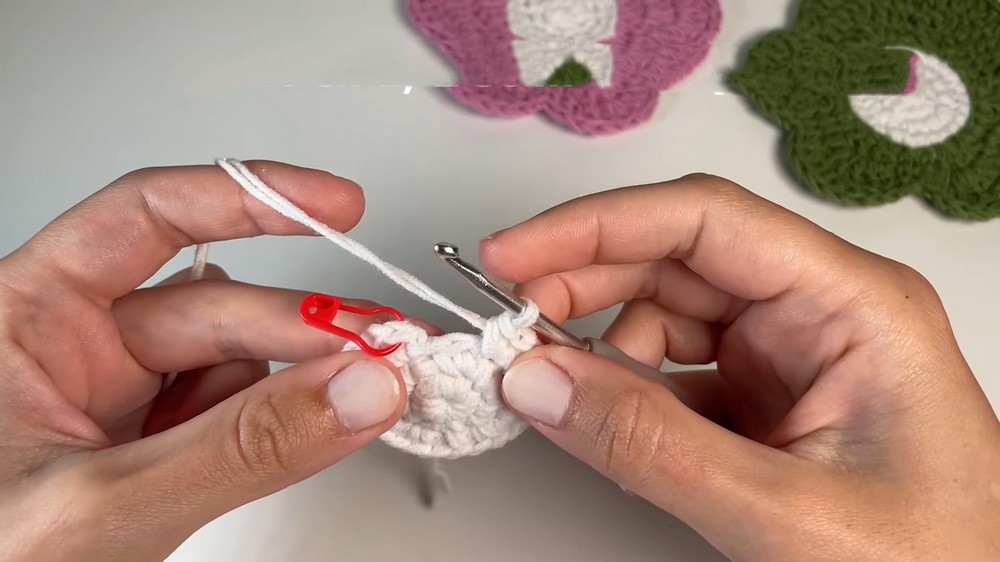
- The first row involves placing six single crochets into the circle. The tail end is crocheted over to secure it and close the center.
Row 2: Increasing Stitches
- The next row involves doubling the stitches by placing two single crochets into each stitch, which increases the row count from six to 12.
Row 3: Doubling Again
- Continuing with the increases, two single crochets are added to each stitch from the previous row, expanding the count to 24 stitches. This creates a steady base for the flower petals.
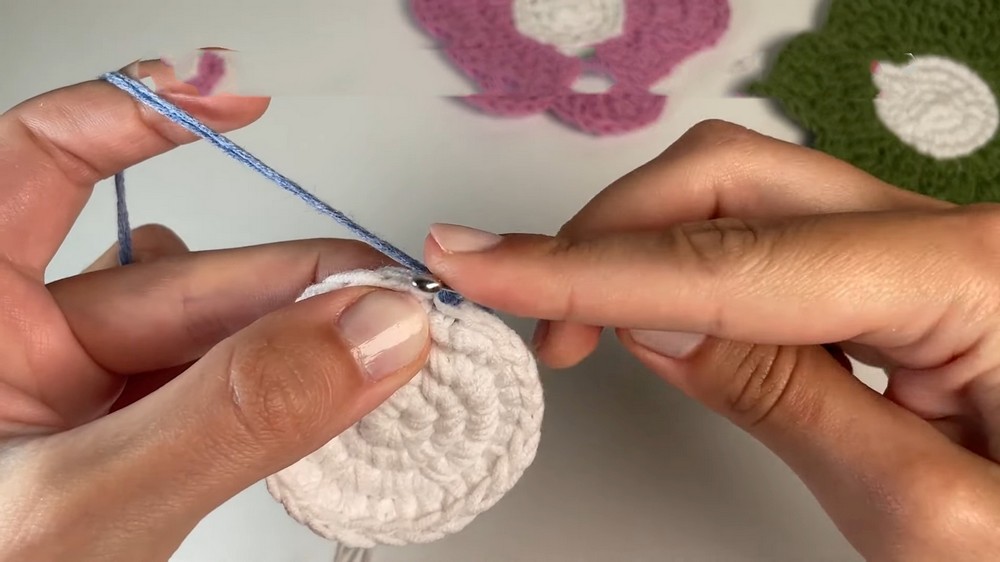
Row 4: Slip Stitch Detail
- A clean transitioning row is added using slip stitches around the edge. This adds a polished look to the base before starting the flower petals.
Creating Petals
Row 5: Adding Petals
- Petals are created using a combination of single and double crochet stitches worked through the back loops only. The pattern alternates single and double crochets, with increases forming rounded petal shapes.

Row 6: Enhancing Petals
- The sixth row builds on the petals with an extended pattern. The stitches alternate between single crochets, double crochets, and increases, providing depth and texture.
Finishing Touches
- Changing Colors: Yarn colors can be switched during the project to customize the appearance of the petals. Changes are made by introducing the new color during a slip stitch.
- Weaving Ends: Loose ends from the yarn are secured and hidden using a yarn needle. This ensures a neat and professional finish.
- Cutting Excess Yarn: Excess yarn is trimmed, completing the coaster.

Final Product
- The completed flower coaster is versatile and visually appealing. The design can be customized with different color combinations and yarn types. For functional use, ensure the yarn is cotton to handle heat effectively, especially for hot beverages.
Key Tips
- Use stitch markers to easily track your progress.
- Double your yarn if you prefer a thicker coaster.
- When changing colors, ensure secure transitions for a clean look.
- Use cotton yarn for durability and heat resistance.