Free String Bag Crochet Pattern with Classic Mesh Look
Upgrade your accessory collection handsomely with this Free Crochet String Bag Pattern that’s designed to provide spacious comfort with a breezy feel.
A string bag is a light and handy crochet bag that can be used for many daily needs. The Free Crochet String Bag Pattern from Наташа Болди /вязание крючком offers a simple way to enjoy a useful bag with a soft and handmade look. Its open style gives it a relaxed feel that works well for everyday use.
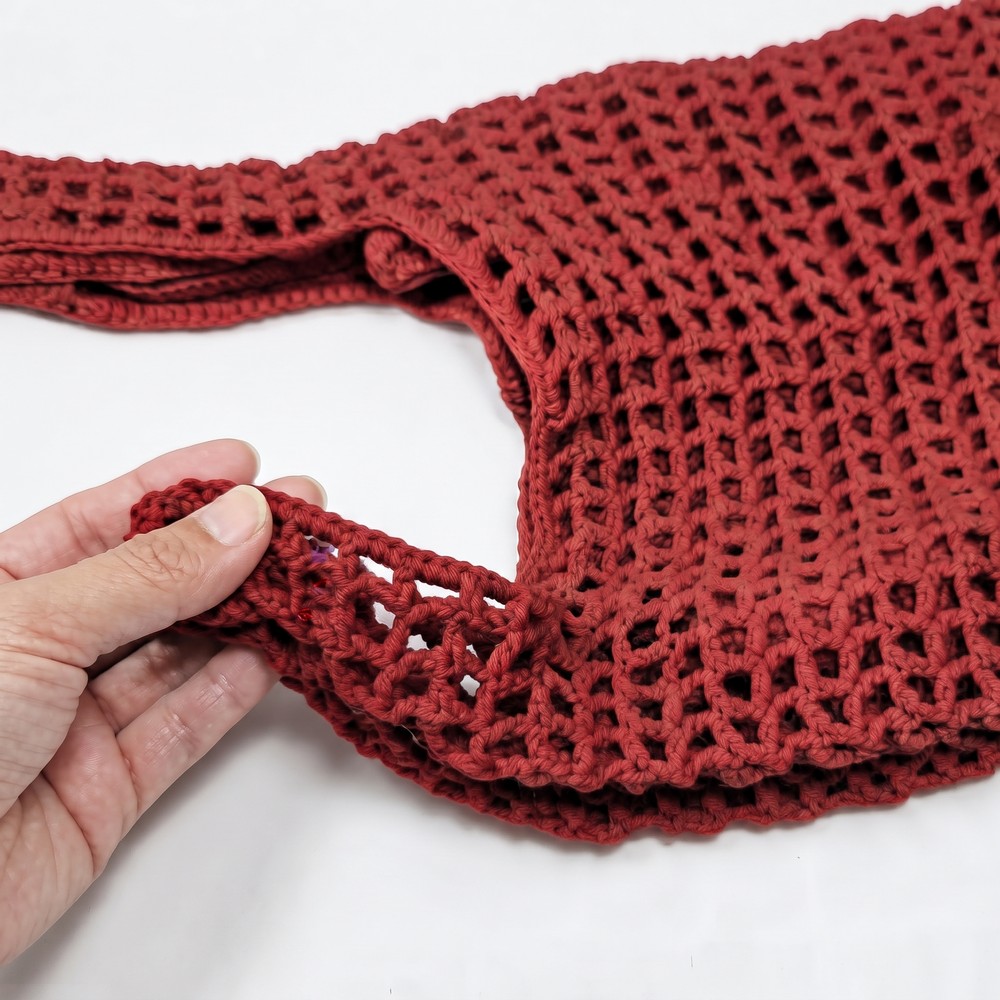
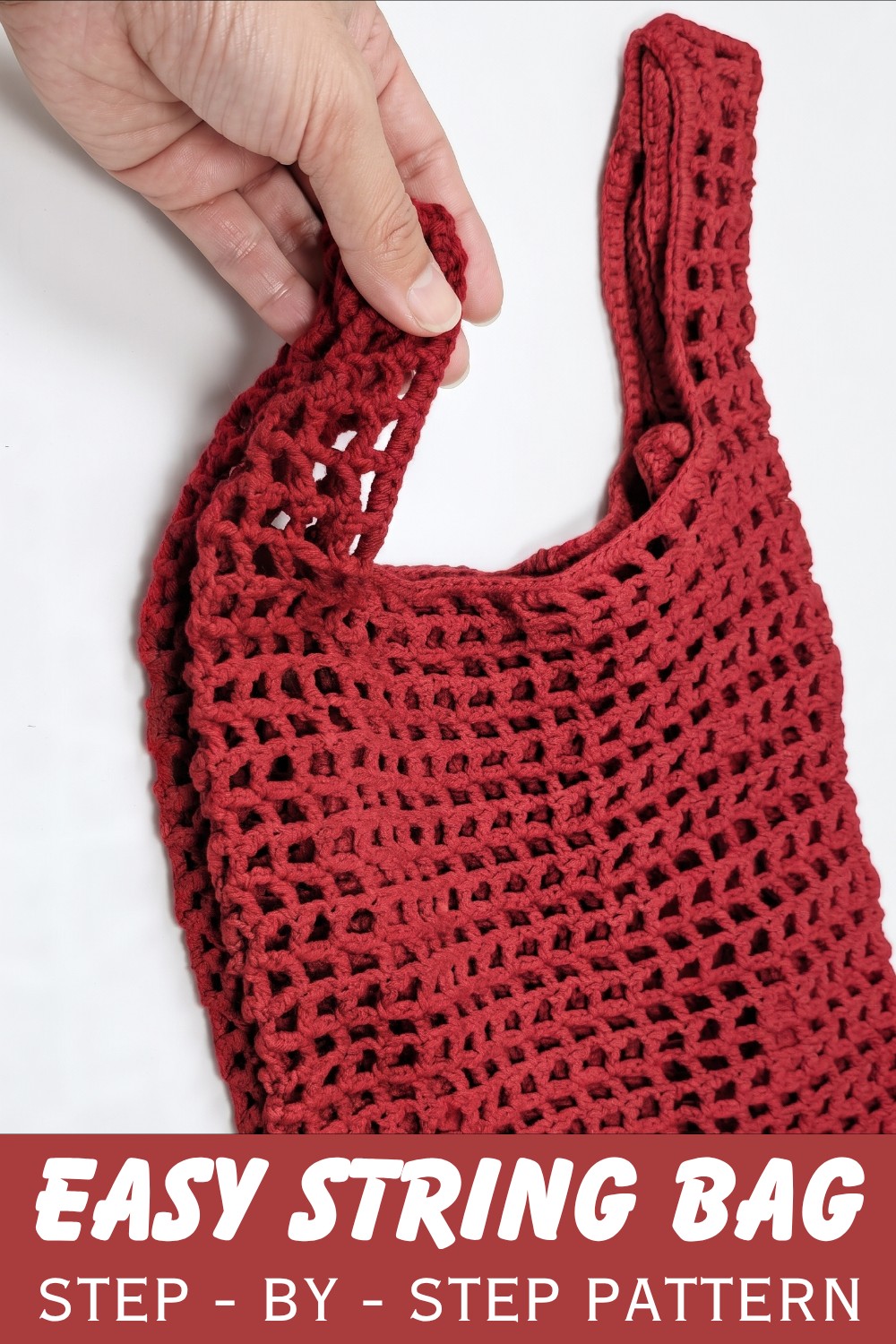
The bag has a simple shape with a roomy body and comfortable handles, making it easy to carry. Its crochet texture gives the surface a nice handmade look, while the open spaces add a light and airy feel. The simple shape also makes the bag look neat without being too plain. Its easy style can fit well with casual clothes and many everyday outfits.
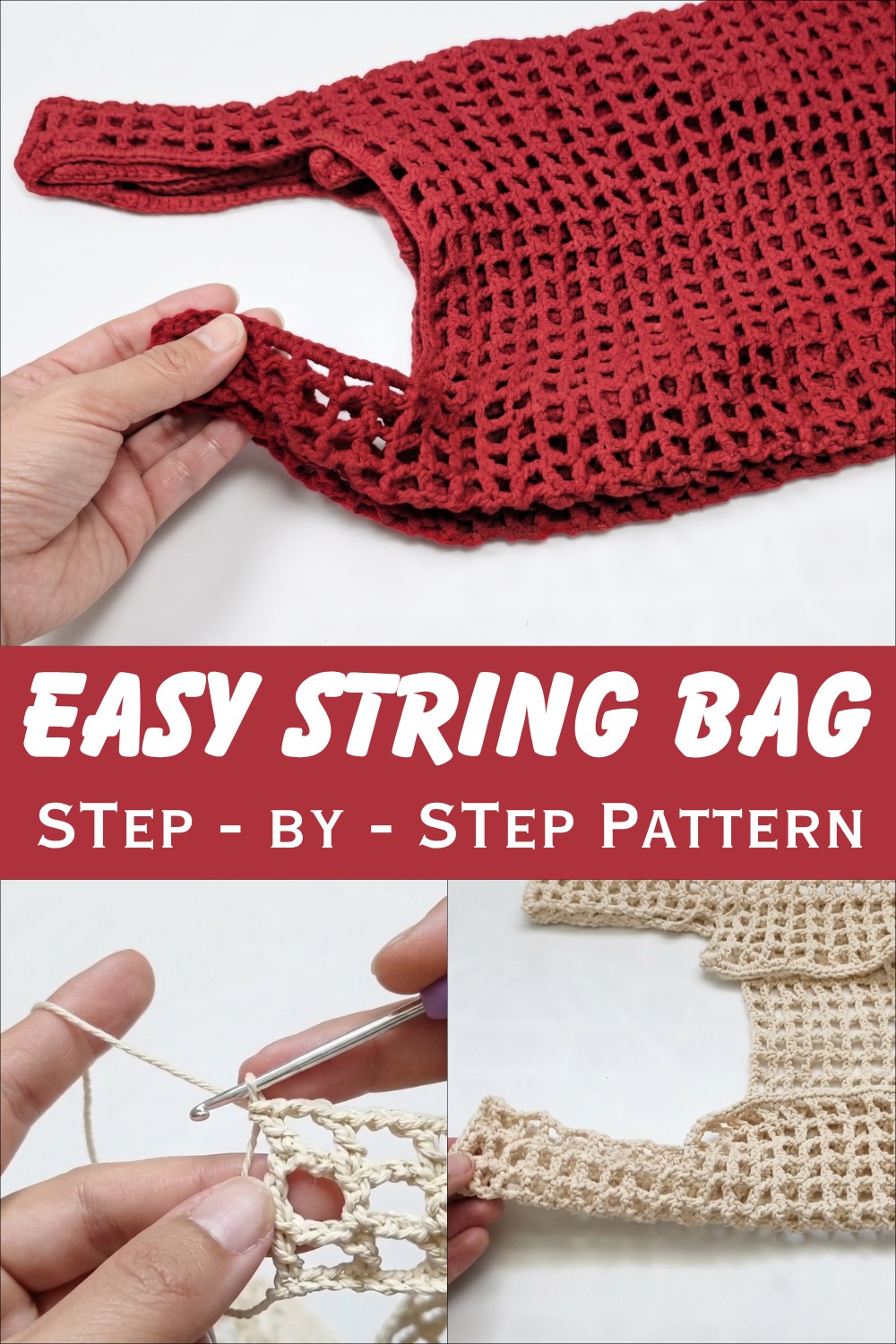
Lightweight Free Crochet String Bag Pattern for Everyday Carry
This crochet string bag can be useful for carrying groceries, books, small items, or things needed for a short trip. It can also be folded or kept nearby when you need an extra bag. The open design makes it easy to see what is inside, while the roomy shape gives you space for several items.
The beauty of this project comes from its simple and useful design. It does not need a lot of extra details to look special. The soft texture, open body, and simple handles give it a fresh and relaxed style. You can also enjoy making it in different colors to give the bag a look that matches your taste.
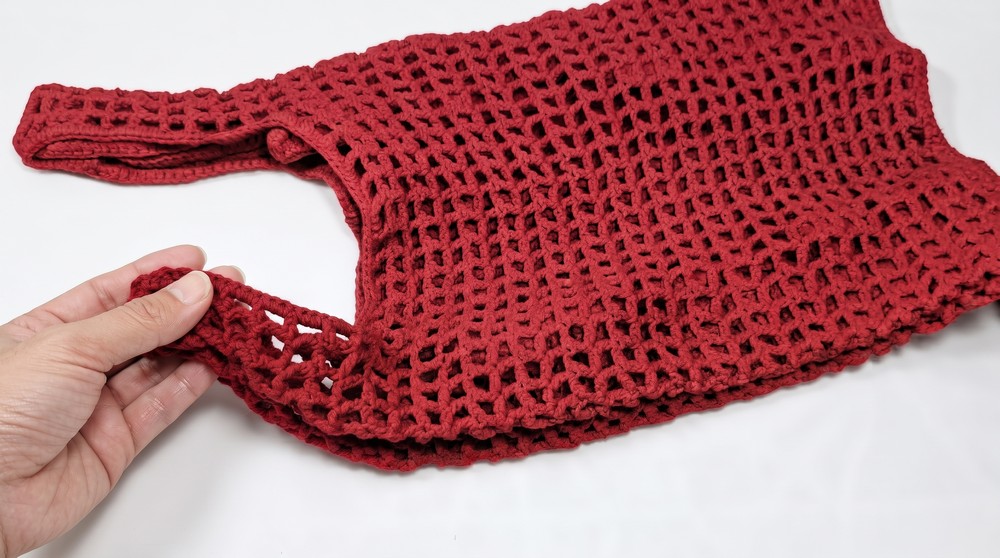
A crochet string bag can also make a thoughtful handmade gift for a friend, family member, or someone who enjoys useful crochet items. It is a nice mix of beauty and everyday use, making it more than just a pretty accessory.
This project is a great choice for anyone who likes simple crochet bags that can be used often. Its light feel, roomy shape, and clean look make it a useful addition to any daily routine.
Crochet Mesh Market Bag Pattern
This detailed crochet tutorial guides you through creating a classic mesh market bag, often called an avoska. Using cotton cord yarn, the bag features a durable and airy mesh construction ideal for carrying groceries or everyday items. With carefully structured stitches and thoughtful assembly, this pattern balances aesthetics with practicality.
Pattern Highlights
- Begins with a long foundation chain creating the base width of the bag.
- Utilizes a repeated pattern of double crochet and chain stitches to produce an open square mesh fabric.
- Creates a structured square mesh with 30 squares in both the base and height for balanced form.
- Features integrated handles worked as solid rectangles, folded and seamed for strength.
- Includes neat finishing with seamless borders, joined panels, and slip-stitched assembly.
- Employs cotton cord yarn for durability, though caution advised for stiffness when using certain materials.
Notes
- Cotton cord from chain stores can be stiffer than desired; consider softer cotton yarn alternatives for flexibility.
- Maintain consistent tension when working the mesh to preserve square shape and size uniformity.
- Marking handle placement before crocheting handles ensures accurate spacing.
- Seaming and folding require careful stitch alignment to keep structural integrity.
- Final edging provides professional and durable finishing that enhances handle comfort.
Skill Level
Intermediate – Familiarity with basic crochet stitches such as chain stitch (CH), double crochet (DC), single crochet (SC), slip stitch (SL ST), working in rows, and joining techniques is recommended.
Materials
- Cotton cord yarn (the demo used a cord from Fix Price, noting stiffness—choose based on preference)
- Crochet hook (size appropriate for chosen cord, approx. 4.0 mm)
- Scissors
- Stitch markers or markers to delineate handle zones
- Tapestry needle for weaving ends and sewing if preferred
Measurements / Sizing
- The bag’s base and height are composed of 30 mesh squares each, giving a balanced rectangular form.
- Handles measure 6 mesh squares wide by 10 rows high, suitable for comfortable carrying.
- Final size depends somewhat on cord thickness and tension but generally results in a practical market bag size.
Gauge and Stitch Pattern
| Stitch | Pattern Description |
|---|---|
| Double Crochet (DC) | Used as the main textured stitch for mesh formation. |
| Chain Stitch (CH) | Creates open spaces forming the mesh squares. |
Gauge varies depending on cord thickness; consistency is essential to maintain uniform mesh squares measuring roughly equal width and height.
Stitch Abbreviations
| Abbreviation | Meaning |
|---|---|
| CH | Chain stitch |
| DC | Double crochet |
| SC | Single crochet |
| SL ST | Slip stitch |
Special Stitches
- Mesh Square Formation: Achieved by alternating double crochet stitches with chain-2 spaces, forming airy squares.
- Turning Chain: Each row starts with 5 chain stitches to replicate the mesh height and maintain square proportions.
The Crochet Pattern
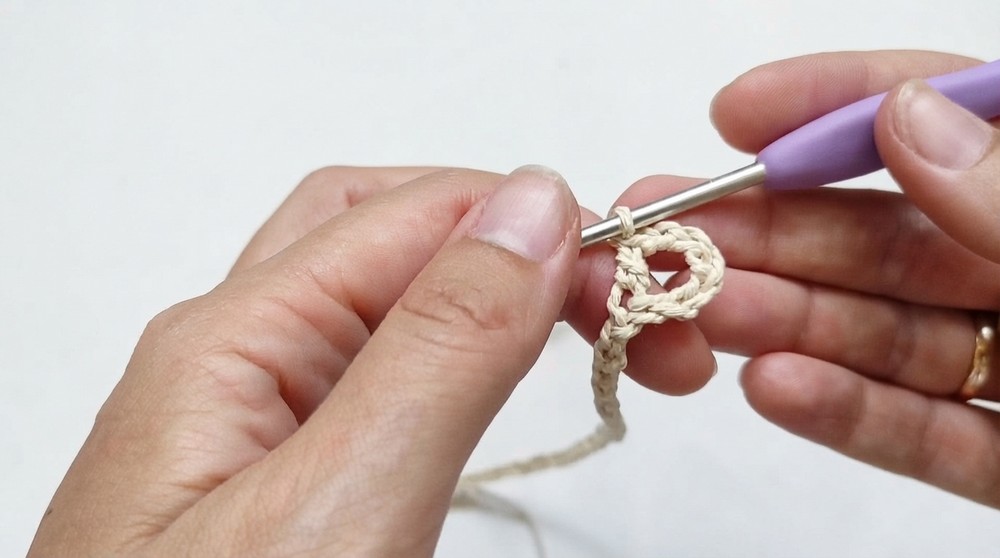
Step 1: Foundation Chain
- Begin by making a foundation of 94 chain stitches. This chain sets the width of the bag’s base and determines the number of mesh squares formed horizontally.
Step 2: First Row – Beginning the Mesh
- Skip the first 7 chains to allow for turning and base formation.
- Work a double crochet (DC) into the 8th chain from the hook.
- Across the foundation chain, alternate as follows:
- Chain 2 (CH 2) for mesh space, then
- Double crochet (DC) into every 3rd chain stitch.
- Continue this alternating pattern of 2 chains, 1 DC to the end of the row. This establishes the first row of mesh squares.
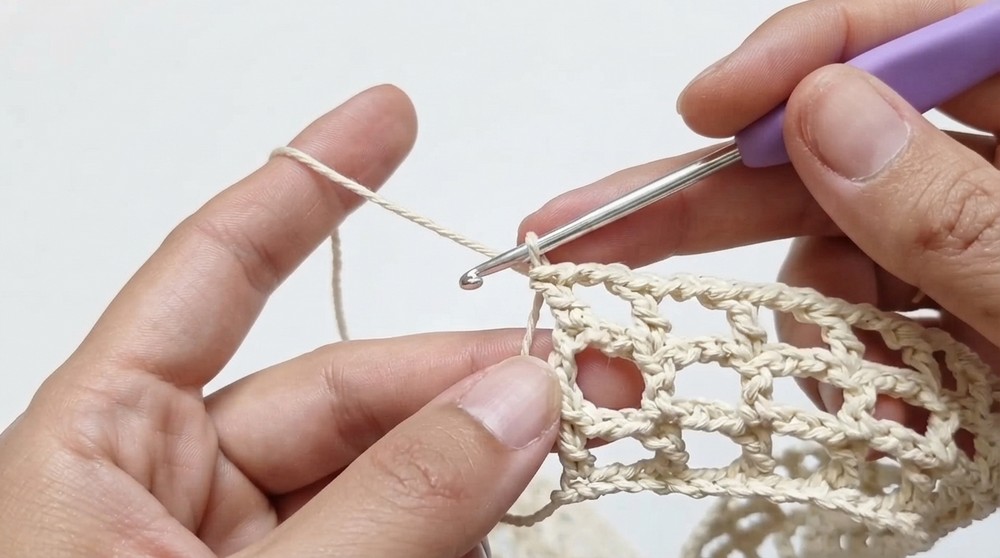
Step 3: Main Body – Constructing the Mesh Fabric
- For all subsequent rows:
- Begin each row with 5 chain stitches (CH 5) as a turning chain. This acts as both the turning mechanism and the first chain space to maintain square mesh size vertically.
- Continue working alternating DC and CH 2 stitches to replicate the initial mesh pattern, ensuring the grid maintains its regular square shape.
- Repeat this mesh row pattern until the bag reaches a height of 30 mesh squares. This is approximately 30 rows.
- The construction results in a flexible mesh panel exhibiting a consistent grid pattern perfect for a market bag.
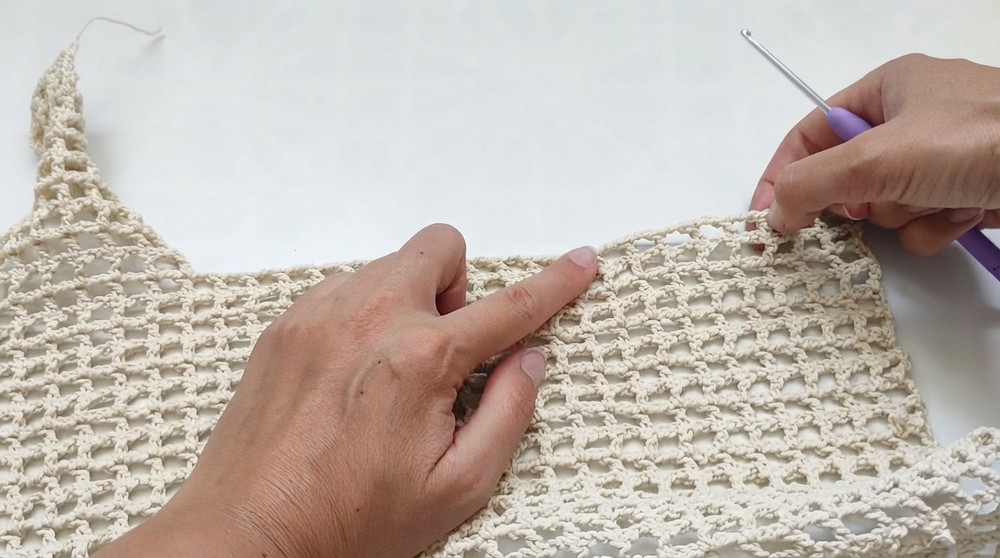
Step 4: Handles
- Mark off 3 mesh squares on each side of the bag panel. Leave 6 mesh squares in the center to form the base of the handles.
- To create the handles:
- Work a rectangle of mesh, 6 squares wide and 10 rows high.
- This translates to continuing the same mesh pattern, but only within the 6 designated mesh squares.
- Once complete, fold the handle lengthwise in half.
- Using 9 single crochet (SC) stitches, join the two folded edges of the handle, effectively creating thick, sturdy handles.
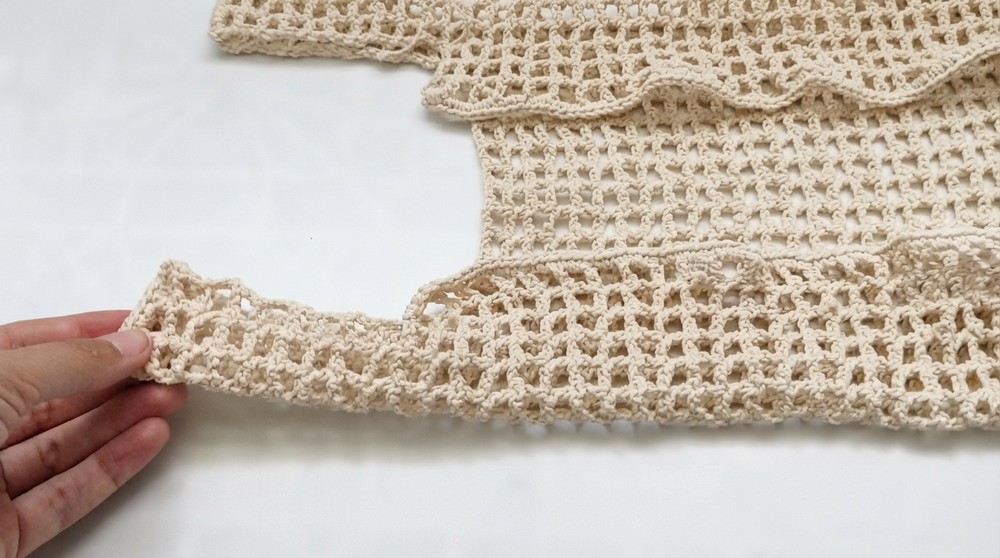
Step 5: Finishing the Base and Sides
- Add a border of single crochets along both sides of the bag panel to stabilize the mesh edges and prepare for seaming.
- For the base:
- Fold the bottom section similarly to the handles.
- Join edges by single crochet to create a flat base, enhancing bag structure for carrying items.
Step 6: Assembly
- Join the two main panels of the bag together:
- Sew the side seams by slip stitching (SL ST) along the borders.
- Join the base and handle seams similarly using slip stitches to create a seamless finish.
- This step results in a strong, flexible bag with integrated handles ready for use.
Step 7: Final Trim
- Work a final round of single crochet (SC) stitches all around the top edge of the bag as well as the inside edges of the handle openings.
- This edging reinforces the bag’s opening and handles, providing a polished and professional finish while improving comfort and durability when carrying heavy loads.
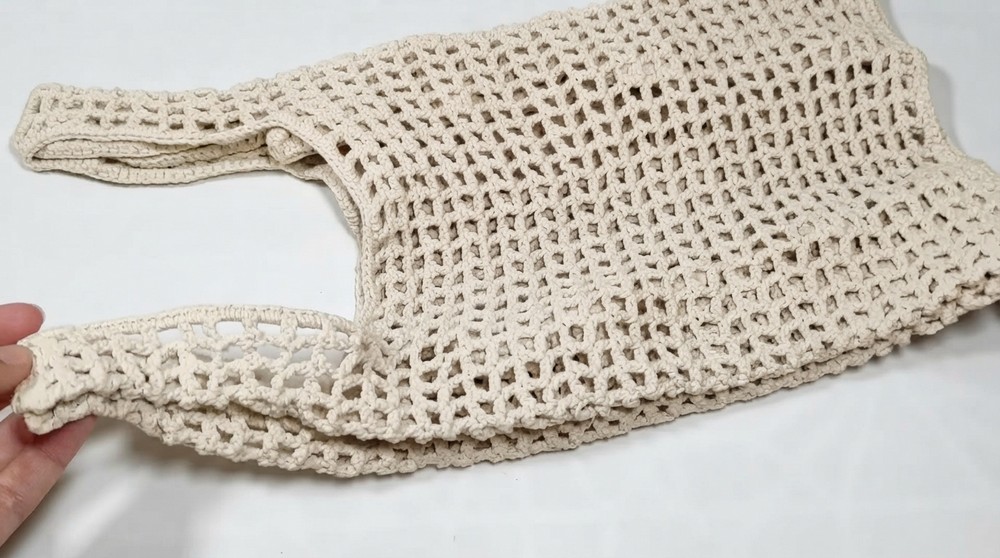
Assembly & Finished Size
The final bag measures approximately the size of a typical market tote with a balanced 30 by 30 square mesh body and strong handles measuring 6 squares wide and 10 rows high. The cotton cord yarn ensures durability while the open mesh allows expandability and breathability. The single crochet trims secure the edges and enhance longevity.
Conclusion
This crochet mesh market bag (avoska) pattern blends aesthetic simplicity with practical function. Beginning with a foundation chain and evolving into airy mesh squares, it utilises basic stitches creatively to create an openwork fabric strong enough for everyday use. The structured handles and finished edges demonstrate careful finishing techniques vital for bag durability.
While cotton cord is optimal for sturdiness, consider yarn softness for comfort based on personal preference. This project offers an engaging yet manageable challenge for crocheters with experience in basic stitches and working in rows. The result is a timeless, eco-friendly bag that reflects the traditional charm of the avoska while incorporating modern crafting precision.